We use cookies

By continuing to browse the site, you are agreeing to our use of cookies.

Accept Learn more

Blog

Helping children adapt: Small changes make a big difference.

 0

Occupational Therapists work with children to build independence and support their growth. Skill-building, adaptive activities like these are put to work in our early intervention, outpatient therapies, and education services.
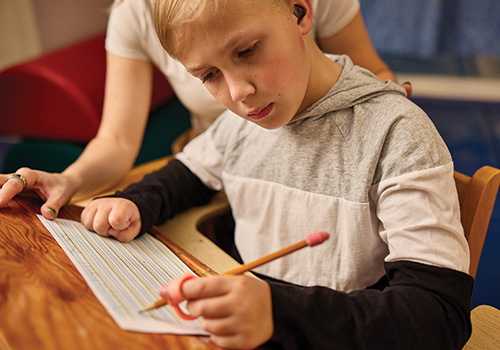
A boy practices writing with an adapted pencil grip on a slant board as a part of his occupational therapy.

Slant Board and Pencil Grip
A slant board angles the writing surface to promote better wrist position and arm support to improve writing and visual motor skills, visual attention, and upper body stability.

A pencil grip helps position fingers for more control and to support fine motor skills.

 
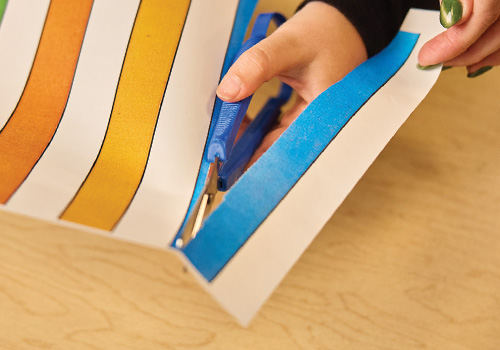
Loop Scissors

Spring-assisted scissors reopen automatically after each cut to allow a full-hand squeeze. Using loop scissors builds hand strength, coordination, and motor planning skills.

A hand using blue adaptive loop scissors cuts through paper with color guidelines as a part of therapy.


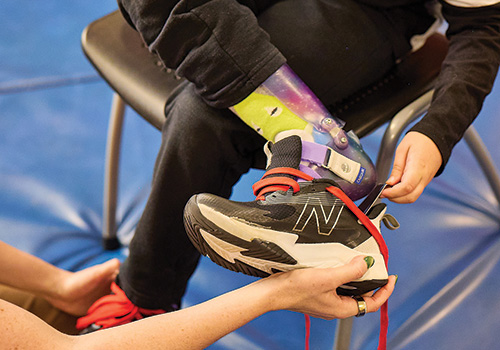
A child is seated in a chair wearing a brightly colored Ankle-Foot Orthosis (AFO). With the assistance of his female therapist, he is using a shoe horn to put his black sneaker on his foot.

Shoe Horn
A simple shoe horn helps kids slide their shoes on more easily and encourages independent dressing.


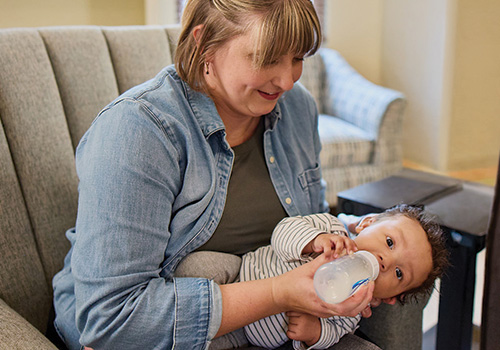
Side Lying Bottle Feeding

Lying your baby on her side during feedings can help decrease reflux or be an adaptation for oral-motor difficulties for safer swallowing. Feeding coordination, comfort, and regulation are all benefits.

A mother wearing a blue denim shirt looks down at her young baby in her arms. She is holding her son on his side and feeding him a bottle of formula as part of therapy.

 
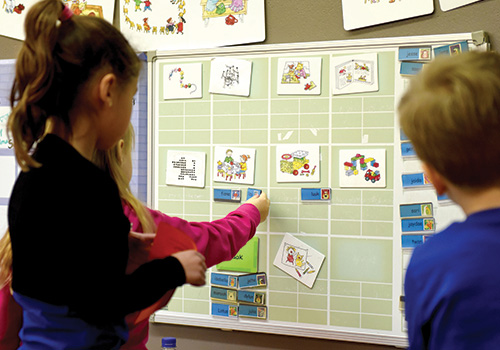
Three preschool-aged children stand in front of a visual routine board hanging up pictures in the appropriate categories.

Visual Board for Daily Routines

Show and don’t just tell! Use pictures or steps for a routine to reduce redirection and encourage independence. Visual aids support sequencing, self-care independence, and executive functioning skills.

  
 0
Alexis Tocco
Senior Staff Occupational Therapist
Kaitlyn Goerl
Clinical Supervisor, Occupational Therapy

Comments (0)

Take Action

Not sure what the next step is? You can always call our Information Center to speak to a team member who can direct you to the support and answers you need.

Call Us: 412.420.2400

Donate
Contact Us
Join Our Team