Blog
Vidal-Phelan's Viewpoint: How heritage shapes leadership (Pittsburgh Business Times)
Adapted from Pittsburgh Business Times | Jordan Jenkins
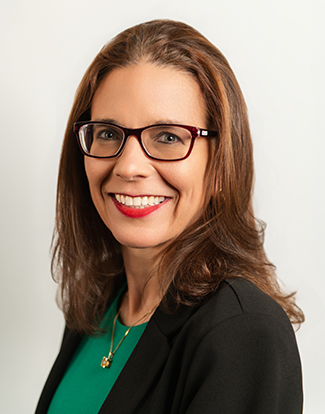
Leadership to me has always been about expanding opportunity and helping others succeed. That belief took root during my childhood in Carolina, Puerto Rico, where family, faith, education and service were central to our lives.
By age 13, I knew I wanted to become a pediatrician. My own pediatrician helped me imagine that future. My father taught me that leadership is not a title, but an act of service rooted in humility and measured by how well we help others succeed. The values of my family shaped my ambitions, especially as a Hispanic woman.
My path to becoming a physician and CEO was generations in the making. It was built on my family’s sacrifices and on the encouragement of people who saw possibilities in me before I fully saw them myself. They taught me to work hard, remain grounded in my values and use every opportunity to create opportunities for others.
Those lessons continue to shape how I lead. Leadership begins with listening, seeing people in the fullness of their experiences and recognizing potential that others may overlook. It also requires us to remember that decisions made in conference rooms have real consequences for children, families and communities. We must approach every opportunity to lead with both confidence and humility.
I enter every room as a pediatrician and executive, and also as a Puerto Rican woman and Latina leader shaped by family, language, culture and community. These experiences are inseparable from my leadership. They influence how I listen, whom I notice, the questions I ask and the possibilities I see.
As president and CEO of The Children’s Institute of Pittsburgh, I bring those experiences to a mission that is deeply personal: Helping every child and family thrive. Our teams provide education, early intervention, therapy, behavioral health care, autism services and family support.
The families we serve remind us that children’s needs do not fit neatly into organizational categories. A developmental delay can affect education, a parent’s ability to work, transportation and the wellbeing of an entire family. Language can become a barrier to understanding and access. A diagnosis can leave families navigating specialists, educators, insurers and agencies when what they need most is a trusted partner.
My experiences as a pediatrician, mother, Puerto Rican woman and leader reinforce the importance of seeing the whole child within the whole family. Effective leaders do not need to have every answer. They must create the conditions for people to be heard, bring different perspectives together and keep those most affected by decisions at the center.
That is why representation in leadership matters. It is about more than who holds a title. It is about the experiences, relationships and questions leaders bring to the table. Our backgrounds shape what we notice, whose voices we seek and how we define both challenges and possibilities.
Representation alone cannot resolve every complex issue. Yet leadership informed by a wider range of lived experiences can deepen understanding and improve decisions. It prompts essential questions: Who is missing from this conversation? Whose experience are we overlooking? Can families understand and trust us? Are our services designed around their lives, or are we asking them to adapt to ours?
Pittsburgh has an opportunity to welcome and develop leaders whose paths differ from those that have traditionally shaped our institutions. Latino leaders and others can bring cultural knowledge, multilingual perspectives, community relationships and personal experience that help organizations better understand and serve the people who depend on them.
Creating those opportunities requires both mentorship and sponsorship. Emerging leaders need people who offer advice, recognize their potential, advocate for them and open doors to meaningful assignments and decision making. I know the difference that kind of belief can make because others extended it to me.
The goal is not for every leader to think alike. Pittsburgh is stronger when leaders bring varied perspectives and approaches. By making pathways to leadership more visible and accessible, we can help the organizations shaping our region better understand and serve an evolving community.
My childhood dream was to become a pediatrician. Today, that dream has grown into a broader mission: Building a future in which a child’s background, disability or circumstances do not determine whether that child belongs, achieves or experiences joy.
I bring my heritage, my family’s sacrifices, my medical training and my lived experience to that mission every day. Progress is generational. We inherit courage and opportunity, along with a responsibility to create opportunities for those who follow. My hope is that Pittsburgh will broaden its understanding of leadership and recognize the strength that comes when more people bring their full identities, histories and experiences to shaping our region’s future.
Written by Dr. Johanna Vidal-Phelan, president and CEO of The Children’s Institute of Pittsburgh.
The Children's Institute Receives 2026 Benjamin Rush Community Organization Award
Take Action
Not sure what the next step is? You can always call our Information Center to speak to a team member who can direct you to the support and answers you need.
Call Us: 412.420.2400
Comments (0)